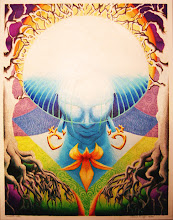
Friday, August 8, 2008

Conciousness


Written by Samael Aun Weor

People confuse consciousness with intelligence or with intellect, thus, they qualify a very intelligent or intellectual person as a very cognizant person.

Undoubtedly—and without fear of deceiving ourselves—we affirm that within a human being the consciousness is a very particular means of apprehending internal knowledge and is completely independent of any mental activity.

The faculty of consciousness facilitates the knowledge of ourselves.

The consciousness grants us the integral knowledge of what is, where it is, what is really known, and what is certainly ignored.

Revolutionary psychology teaches that only the individual by himself can know his own self. Yes, only we ourselves can know if we are or are not cognizant at any given moment; only by oneself can one know about one’s own consciousness, and whether it was active or not at any given moment.
Only the individual by himself—and nobody but himself—can become aware at any given instant, at any given moment, if before that instant, if before that moment, he was not really cognizant, that his consciousness was very asleep. Thereafter, he will fall asleep again and forget that experience, or will keep it as a memory, as the memory of a strong experience.

It is essential to know that the consciousness within rational animals is not a continuous or permanent entity. Normally, the consciousness within these intellectual animals mistakenly called humans sleeps profoundly; thus, the moments in which their consciousness is awake are seldom, very seldom. Yes, intellectual animals work, drive cars, marry, die, etc., with their consciousness totally asleep, and it awakens only in very exceptional moments.

Sadly, the life of present human-like people is a life of dreams, yet they believe they are awake and will never admit that they are dreaming—that is, that their consciousness is asleep.

If any of them were to suddenly awaken, he would feel terribly ashamed of himself, he would immediately comprehend his clownishness, his own buffoonery, since this life is frightfully ludicrous, horribly tragic, and seldomly sublime.

If a boxer in the middle of a fight was to unexpectedly awaken—covered in shame—he would see the entire fascinated public and then—before the astonishment of the sleeping and unconscious multitudes—he would flee from the horrible spectacle.

When a human being admits that he has his consciousness asleep, you can be sure that he has already begun to awaken.

The reactionary schools of old-fashioned psychology that deny the existence of the consciousness—and that even declare the term useless—reveal a most profound state of sleep. The henchmen of such schools snooze very profoundly within an utterly infraconscious and unconscious state.

Those who confuse the consciousness with psychological functions, i.e. thoughts, feelings, motor impulses and sensations, are indeed very unconscious: they are profoundly asleep.

Those who admit the existence of the consciousness, and nonetheless, utterly deny the different degrees of cognizance, reveal their lack of cognizant experience, that is, they reveal their sleeping consciousness. Any person who—even for a brief moment—awakened his consciousness, knows very well by his own experience that different degrees of observable consciousness exist within oneself, namely:

1. First: time; how long did we remain cognizant?
2. Second: frequency; how many times have we awakened our consciousness?
3. Third: amplitude and penetration; what was one cognizant of?

Revolutionary psychology and the ancient Philokalia affirm that the consciousness can be awakened and made continuous and controllable by means of a special kind of super-effort.

A fundamental education has as it’s objective the awakening of the consciousness. It is worthless to expend ten or fifteen years of study in school, college, and university if upon completion of our studies we are sleeping automatons.

It is no exaggeration to affirm that—by means of great effort—intellectual animals can become cognizant of themselves for a brief couple of minutes; nonetheless, it is clear that, in regard to cognizance, there exist remarkable exceptions that we must seek with the lantern of Diogenes. These remarkable cases are represented by authentic human beings such as Buddha, Jesus, Hermes, Quetzalcoatl, etc. Yes, these founders of religions possess continuous cognizance: that is, they are great, enlightened men.

Commonly, people are not cognizant of themselves, yet have the illusion of being cognizant in a continuous manner; this illusion is due to memory and all the processes of thought. For example, any individual who practices a retrospective exercise in order to remember their entire life, can truly recall, remember the number of times they married, how many children they begot, who their parents were, their teachers, etc. However, this does not signify the awakening of their consciousness; this is simply the remembrance of unconscious actions, and that is all.

Here, it is necessary to repeat what we have stated in former chapters. There are four states of consciousness:

1. Sleep
2. Vigil state
3. Self-cognizance
4. Objective cognizance

The wretched intellectual animals mistakenly called humans live only in two of these states, since they expend one half of their life in their bed sleeping and the other half in the wrongly called “vigil state,” which indeed is a sleepwalking state. Yes, the individual who in bed sleeps and dreams believes that he awakens by merely returning to the vigil state, but he continues dreaming, because for him the vigil state is indeed a sleepwalking state. This is similar to daybreak: the stars seem to hide when the sun rises, yet they continue to exist even when the physical eyes cannot perceive them.

In normal life, the populace knows nothing about self-cognizance, and much less about objective cognizance. Nevertheless, people are proud and everyone thinks that they are cognizant of themselves. Yes, intellectual animals firmly believe that they have cognizance of themselves and they would never accept—under any circumstances—being told that they are actually asleep and that they live unconscious of themselves.

Exceptional moments exist when the intellectual animal awakens, but these moments are very rare. This awakening can occur in an instance of great danger, or during an intense emotion, or in some new circumstance, or in some new, unexpected situation, etc. Nonetheless, it is indeed a disgrace that the intellectual animal does not have any control over those fleeting states of awakened consciousness, and that he cannot evoke them in order to make them continuous.

Nevertheless, these fundamentals of Gnostic education affirm that any individual can acquire control over his consciousness and thus attain self-cognizance. Yes, this revolutionary psychology has methods, scientific processes, to awaken the consciousness.

Perseid Meteor Shower To Peak August 11 and 12


Graeme Stemp-Morlock
for National Geographic News
August 7, 2008

Unlike short-lived solar eclipses or unpredictable auroras, meteor showers regularly offer skywatchers a dazzling show.

Soon the curtain will rise on one of the best of these showers: the Perseids, so called because the meteors appear to originate in the constellation Perseus.

Slated to peak sometime during the night and early morning of August 11 to 12, the shower offers one of the year's best chances to see a shooting star.

Under perfect conditions, observers can expect to see about 90 to100 meteors an hour, said Wayne Hally, a self-professed "meteor geek" who writes a newsletter for the North American Meteor Network.

Hally spends a few hundred hours a year watching for meteors from his base in northwest New Jersey.

The stargazer said he expects the Perseids to have a sustained peak over several hours this year.

"Based on last year's results, it appears that the actual peak was not at a specific time but lasted a day and a half surrounding that date," Hally said.

"The peak [this year] might be the whole night."

A Blaze of Glory

Meteor showers happen regularly when Earth plows through a stream of dust and small rocks trailed by a comet after its close approach to the sun.

(Related: "Meteor Dust May Affect the Weather, Study Says" [September 13, 2005].)

109P Swift-Tuttle, the comet responsible for the Perseid meteor shower, orbits the sun every 133 years. The comet last made a close approach in 1992, resulting in a spectacular meteor shower with rates four times higher than average.

"The Perseids have been seen since 36 A.D., almost 2,000 years ago. Most [meteor showers] have not been around that long, as streams spread out," Hally said.

"The comet that produces the Perseids is in a good reliable orbit. So it's been around for 2,000 years, and it will probably be around for another 2,000."

More than just a pretty spectacle, meteors offer astronomers a glimpse back in time to when planets formed.

Paul Wiegert, a physicist and astronomer at Canada's University of Western Ontario, studies meteors with the Meteor Physics Group, the largest research body of its kind in North America.

"[Comets] are interesting because they are extremely old, forming when planets did, and they are unaltered since. With comets, you can observe what went into making the Earth, its original ingredients," Wiegert said.

Occasionally pieces of comet debris survive the fiery descent through our atmosphere and crash into Earth as meteorites.

"Meteorites can be billions of years old, much older than anything on Earth," Wiegert said.

"It's like a free sample of material from outer space. Space missions cost millions of dollars to go get that material, but sometimes we can get it delivered here for free."

(Related: "Chicago Meteor Shower a Windfall for Scientists" [May 13, 2003].)

Starry Nights

Observers on the U.S. West Coast will likely get the best view of the peak just before dawn on August 12.


But the Perseids will put on a good show as seen from any place on Earth for several reasons.

The moon will set between 1 and 2 a.m., making the sky darker and allowing observers to see fainter meteors.

Also, the region in the sky where the meteors appear to come from will rise up higher as the night progresses, so fewer meteors will shoot below the horizon.

Meteors higher in the sky also appear brighter, because they are seen through less distortion-causing atmosphere.

Hally, the meteor buff, says that people who want to see the largest number of meteors possible should find the darkest sky available and face northeast, where the meteors will appear to come from.

And don't forget a warm blanket. Even August can feel cold with the early morning dew, he noted. A reclining deck chair can also help reduce neck strain from looking up.

"[W]ith meteors, you never know exactly what you are going to get," Hally said. "With a telescope on a star cluster, it will look the same today as the next hundred years.

"If you look at the planets, you don't see a lot of change. But with a meteor shower you never really know what's going to happen."

Gorilla "Paradise" Found; May Double World Numbers


Dan Morrison
for National Geographic News
August 5, 2008

Deep in the hinterlands of the Republic of the Congo lies a secret ape paradise that is home to 125,000 western lowland gorillas, researchers announced today.

The findings, if confirmed, would more than double the world's estimated population of gorillas.

Western lowland gorillas are a subspecies classified as critically endangered by the International Union for Conservation of Nature (IUCN).

Their numbers have been devastated in recent years by illegal hunting for bush meat and the spread of the Ebola virus. Just last year scientists projected the animals' population could fall as low as 50,000 by 2011.

Now those predictions may have to be dramatically reworked to incorporate findings released today by the Wildlife Conservation Society (WCS).

A first ever ape census in northern Congo found 73,000 of the gorillas in that country's Ntokou-Pikounda region and 52,000 more in the Ndoki-Likouala area.

The Ndoki population includes an obscure group of nearly 6,000 gorillas living in close quarters in isolated swamps near Lac Télé.

"We knew there were apes there, we just had no idea how many," said WCS's Emma Stokes, one of the lead researchers in the two-year project.

The gorillas have thrived thanks to their remoteness from human settlements, food-rich habitats, and two decades of conservation efforts in one of the world's poorest countries, Stokes said.

Shy, But Plentiful

Lowland gorillas are more common than their mountain cousins. The animals are found in tropical forests and swamps in Angola, Cameroon, the Central African Republic, Congo, the Democratic Republic of the Congo, Equatorial Guinea, and Gabon.

Saturday, August 2, 2008

Organics: The Dirty Dozen

How time flies when you are sleepin....

Its been a busy summer filled with time outside, art, music and meditation. Tons of pics to share. Until then, here is a list of the foods that it is most important to buy organic, as well as, a list of those foods that test lowest in pesticides when chemicals are used.

Dirty Dozen (buy these organic):

peaches
apples
sweet bell peppers
celery
nectarines
strawberries
cherries
lettuce
grapes
pears
spinach
potatoes


Cleanest 12 (lowest in pesticides):

onions
avocados
sweet frozen corn
pineapples
mangoes
sweet peas frozen
asparagus
kiwis
bananas
cabbage
broccoli
eggplant

Saturday, May 31, 2008

Video: Uncontacted tribes


Over one hundred tribes around the world choose to reject contact with outsiders. They are the most vulnerable peoples on the planet.

Many of them are living on the run, fleeing invasions of their land by colonists, loggers, oil crews and cattle ranchers. They have often seen their friends and families die at the hands of outsiders, in unreported massacres or epidemics.

This is their story.


(The photo above is a recent fly over of a remote area between Brazil and Peru where the native people took up arms when they saw the planes flying over.)

Thursday, May 29, 2008

Vatican says it will Excommunicate female Priests


By Phil Stewart
Thu May 29,2008
VATICAN CITY (Reuters) - The Vatican issued its most explicit decree so far against the ordination of women priests on Thursday, punishing them and the bishops who try to ordain them with automatic excommunication.

The decree was written by the Vatican's Congregation for the Doctrine of the Faith and published in the Vatican newspaper L'Osservatore Romano, giving it immediate effect.

A Vatican spokesman said the decree made the Church's existing ban on women priests more explicit by clarifying that excommunication would follow all such ordinations.

Excommunication forbids those affected from receiving the sacraments or sharing in acts of public worship.

Rev. Tom Reese, a senior fellow at the Woodstock Theological Center at Georgetown University, said he thought the decree was meant to send a warning to the growing number of Catholics who favor admitting women to the priesthood.

"I think the reason they're doing this is that they've realized there is more and more support among Catholics for ordaining women, and they want to make clear that this is a no-no," Reese said.

The Church says it cannot change the rules banning women from the priesthood because Christ chose only men as his apostles. Church law states that only a baptized male can be made a priest.

Proponents of women's ordination say Christ was only acting according to the social norms of his time.

They cite the letters of Saint Paul, some of the earliest texts of Christianity, to show that women played important roles in the early church.

Attempts to ordain women priests are highly unusual. But the archbishop of St. Louis earlier this year declared three women excommunicated after an ordination ceremony in his diocese.

Excommunication is usually "ferendae sententiae," imposed as punishment.

But some offences, including heresy, schism, and laying violent hands on the Pope, are considered so disruptive of ecclesiastical life that they trigger automatic excommunication, or "latae sententiae.

"The decree says that women priests and the bishops who ordain them would be excommunicated "latae sententiae."

This was the same excommunication invoked against a renegade African archbishop who also broke Vatican rules when he ordained four married men bishops in 2006.

The archbishop, Emmanuel Milingo, made world headlines in 2001 for getting married himself in Reverend Sun Myung Moon's Unification Church at a mass wedding in a New York hotel. His union was never recognized by the Catholic Church.

Monday, May 26, 2008

Ron Eglash: African fractals, in buildings and braids


"I am a mathematician, and I would like to stand on your roof." This is how Ron Eglash greeted many African families while researching the intriguing fractal patterns he noticed in villages across the continent. He talks about his work exploring the rigorous fractal math underpinning African architecture, art and even hair braiding.
(Thanks Noelle!)